


Who Commands the Global Brain of AI? The Hidden Empire of Data Centers
Discover the dirty and strategic backstage of AI’s physical infrastructure — from megawatts to laws, from the real owners to the collateral profits — and why this game is the new digital geopolitics.
1. The Real Map of AI Power — Numbers, Climate, and Fine Print
Global energy consumption:
In 2024, global data center energy use reached around 415 terawatt-hours — about 1.5% of the world’s electricity. Projections indicate that by 2030 this could double to 945 terawatt-hours, almost Japan’s entire annual consumption.
AI as the growth engine:
AI already accounts for up to 20% of data center energy use and could jump to nearly 50% this year. If projections hold, by 2030 AI centers could consume 4.5% of all global electricity.
Ideal temperature:
The ideal operating temperature isn’t as low as people think. Google’s most efficient data center runs at 35°C (95°F), using only fresh air — no electric air conditioning.
Laws that pave the way (or light the fuse):
Some jurisdictions require data centers to source 50% of their energy from unsubsidized renewables, reaching 100% by 2027. In the UK, delays in energy and planning reforms threaten massive AI investments.
2. The Invisible Owners Behind the Metal Racks
Hyperscalers and real estate funds dominate the market. AWS, Google, and Microsoft run hundreds of global facilities. Digital Realty operates over 300 data centers in 25 countries and is committed to carbon neutrality by 2030. Equinix owns 260 facilities across 33 countries and leads in connectivity and global infrastructure.
In Southeast Asia, YTL Power has built a data center campus in Johor, Malaysia, powered by a 500 MW solar plant and equipped with an NVIDIA supercomputer boasting over 300 exaflops of AI performance.
3. The Geopolitical Chessboard of Infrastructure
Controlling data centers is more than a billion-dollar business — it’s the new arms race of the 21st century.
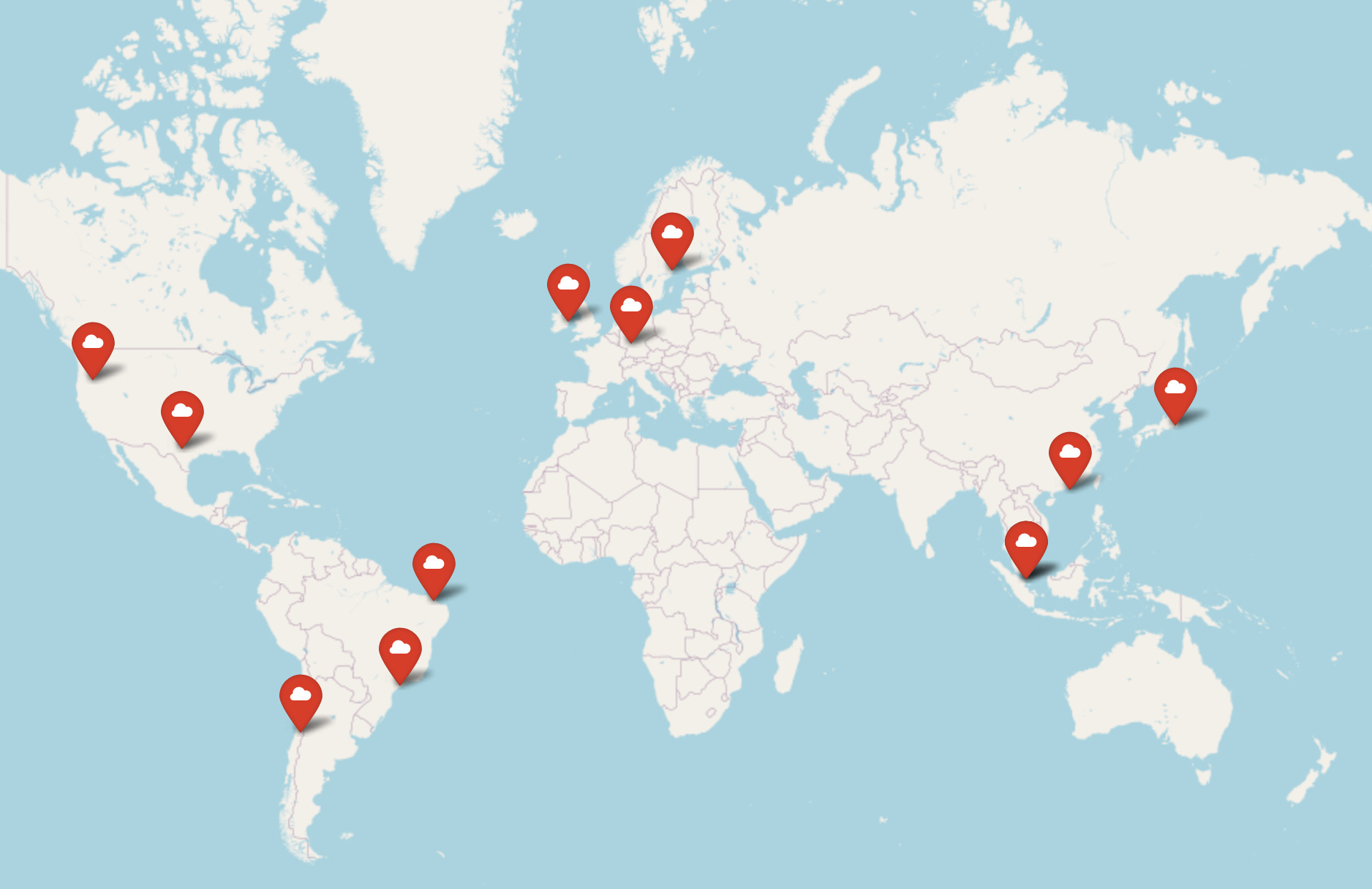
Countries like Ireland, Singapore, and the UAE have become critical hubs, luring hyperscalers with tax incentives and cheap energy — but demanding geopolitical loyalty in return.
China is betting on strategic zones like the Pearl River Delta while expanding control over submarine cables and building “mirror” data centers to bypass sanctions.
Behind the scenes, NATO already classifies digital infrastructure as a critical military asset, and Belt and Road agreements hide clauses about sovereignty over data traffic.
Whoever controls the right land, energy, and climate for AI controls politics — without firing a shot.
4. What No One Talks About
Water is the new gold. A 100 MW data center can consume up to 2 million liters of water per day — the daily use of about 6,500 households. Globally, consumption already reaches 560 billion liters per year and could double by 2030. In Aragón, Spain, Amazon was licensed to withdraw 755,000 cubic meters annually, sparking tension with farming communities.
The “green energy” label is often a façade. Many of these giants burn more natural gas and coal than they use wind or solar. Some coal plants have even been reconfigured to power AI 24/7.
The power grid is straining. Data centers could consume up to 12% of U.S. electricity by 2028, up from 4.4% in 2023 — a demand jump from 325 to 580 terawatt-hours.
And then there’s the Jevons Paradox: even as computing becomes more efficient per watt, overall consumption rises proportionally — making demand growth inevitable.
5. The Vulnerabilities That Could Cripple the AI Brain
AI’s superpower has an Achilles’ heel: it’s physical.
A data center concentrated in an area prone to severe drought, flooding, or political instability is a ticking time bomb.
In the U.S., half of processing capacity is in states at risk of summer blackouts. In Asia, vital facilities sit less than 50 km from military conflict zones.
What happens if a country loses 30% of its AI capacity in a coordinated attack?
The threat isn’t just physical: governments can nationalize private centers during crises, and cyberattacks targeting cooling systems can take down entire operations.
Power isn’t just about who builds — it’s about who can shut it down.
6. The Hidden Economy Around Data Centers
Regions hosting data centers thrive — but who actually profits?
Local service booms: Cooling companies, 24/7 security, restaurants, lodging, construction, and power suppliers see spikes in demand.
Tax breaks and cheap land: Governments offer incentives and ready infrastructure to lure these “digital tenants.”
Tied supply chains: Sand mining for submarine cables, extraction of critical minerals (lithium, nickel), and even reusing waste heat to sell back as local energy.
In short: data centers are “light blinks, heavy drinkers” — massive consumers disguised as digital economy champions.
7. The Collateral Future of Data Centers
Mass expansion is creating entire cities dedicated to serving AI — digital free zones.
Imagine municipalities whose entire economy revolves around housing supercomputers, with their own laws on energy, privacy, and taxation.
Talks are growing about submarine data centers, like Microsoft’s project, to cut cooling costs and shield against physical attacks.
Waste heat will become a commodity: entire neighborhoods heated by AI in the European winter, sold as “circular green energy.”
And the most dystopian vision: processing passports — paid credentials to run advanced AI models, restricting access through cost and geopolitics.
8. Strategic Narrative to Shake Any Tech Forum
AI control isn’t in the algorithms — it’s in the invisible stockpiles of energy, water, and land. Whoever holds these critical hot and cold zones owns the digital mind. The race is already an infrastructure war, not a software one.
9. The Invisible Footprints of Power
The money fueling AI’s infrastructure rarely comes from where it seems.
Sovereign wealth funds like Singapore’s GIC and Norway’s fund hold hidden stakes in global operators.
Oil and gas giants are reinventing themselves as “clean energy providers” for AI, selling wind and solar as façades for pipelines.
Private equity firms buy strategic land only to resell energy contracts and environmental permits to hyperscalers.
The surface is steel and fiber optics. The subsoil is oil, politics, and land speculation.
10. Question for the Reader
If AI power is hidden in physical geography, energy, and water, aren’t we surrendering the sovereignty of digital thought to whoever controls these territories?
If this made you rethink who really controls the global brain of AI, imagine what I don’t publish for free.
Tech Gossip – Radar of the End of the World™ delivers weekly investigations, trends, and secrets big techs would rather you never read.
Subscribe now to get it in your inbox before the topic blows up in the mainstream.
And if you know someone who needs to understand where digital power truly lies, share this article with them now. Information is ammunition.
#InfraTech #AIpowerplay #DarkInfrastructure #DigitalGeopolitics #TechGossip #ia #ai #AIInfrastructure #AIDataCenters #Hyperscale #CloudWars #ComputePower #EdgeComputing #HighPerformanceComputing #AIProcessing #Supercomputing #DigitalSovereignty #TechGeopolitics #DataColonialism #InfrastructureWar #DigitalEmpire #GeoAI #GlobalPowerShift #InfrastructurePolitics